Monday, October 21, 2013

Personal Sensor System

DO-RA Is An Environmental Sensor That Plugs Into Your Phone & Tracks Radiation Exposure

DO-RA_uni

There’s a thriving cottage industry of smartphone extension hardware that plugs into the headphone jack on your phone and extends its capabilities in one way or another — feeding whatever special data it grabs back to an app where you get to parse, poke and prod it. It’s hard to keep track of the cool stuff people are coming up with to augment phones — whether it’s wind meters or light meters or even borescopes. Well, here’s an even more off-the-wall extension: meet DO-RA — a personal dosimeter-radiometer for measuring background radiation.

Granted, this is not something the average person might feel they need. And yet factor in the quantified self/health tracking trend and there is likely a potential market in piquing the interest of quantified selfers curious about how much background radiation they are exposed to every day. Plus there are of course obvious use-cases in specific regions that have suffered major nuclear incidents, like Fukushima or Chernobyl, or for people who work in the nuclear industry. DO-RA’s creators says Japan is going to be a key target market when they go into production. Other targets are the U.S. and Europe. It reckons it will initially be able to ship 1 million DO-RA devices per year into these three markets. The device is due to go into commercial production this autumn.

The Russian startup behind DO-RA, Intersoft Eurasia, claims to have garnered 1,300 pre-orders for the device over the last few months, without doing any dedicated advertising — the majority of pre-orderers are apparently (and incidentally) male iPhone and iPad owners. So it sounds like it’s ticking a fair few folks’ ‘cool gadget’ box already.

The DO-RA device will retail for around $150 — which Intersoft says is its primary disruption, being considerably lower than rival portable dosimeters, typically costing $250-$400. It names its main competitors as devices made by U.S. company Scosche, and Japanese carrier NTT DoCoMo. Last year Japan’s Softbank also announced a smartphone with an integrated radiation dosimeter, with the phone made by Sharp. This year, a San Francisco-based startup has also entered the space, with a personal environmental monitoring device, called Lapka (also costing circa $250), so interest in environmental-monitoring devices certainly appears to be on the rise.

DO-RA — which is short for dosimeter-radiometer — was conceived by its Russian creator, Vladimir Elin, after reading articles on the Fukushima Daiichi nuclear disaster in Japan, and stumbling across the idea of a portable dosimeter. A bit more research followed, patents were filed and an international patent was granted on the DO-RA concept in Ukraine, in November last year. Intersoft has made several prototypes since 2011 — and produced multiple apps, for pretty much every mobile and desktop platform going — but is only now gearing up to get the hardware product into market. (Its existing apps are currently running in a dummy simulation mode.)

So what exactly does DO-RA do? The universal design version of the gadget will plug into the audio jack on a smartphone, tablet or laptop and, when used in conjunction with the DO-RA app, will be able to record radiation measurements — using a silicon-based ionizing radiation sensor — to build up a picture of radiation exposure for the mobile owner or at a particular location (if you’re using it with a less portable desktop device).

The system can continuously monitor background radiation levels, when the app is used in radiometer mode (which is presumably going to be the more battery-draining option — albeit the device contains its own battery), taking measurements every four seconds. There’s also a dosimeter mode, where the app measures “an equivalent exposure over the monitoring period” and then forecasts annual exposure based on that snapshot.

The company lists the main functions of the DO-RA mobile device plus app as:

- Measuring the hourly/daily/weekly/monthly/annual equivalent radiation dose received by an owner of a mobile/smart phone;

- Warning on allowable, maximum and unallowable equivalent radiation dose by audible alarms/messages of a mobile/smart phone:”Normal Dose”, “Maximum Dose”, “Unallowable Dose”.

- Development of trends of condition of organs and systems of an owner of a mobile phone subject to received radiation dose;

- Advising an owner of a mobile/smart phone on prevention measures subject to received radiation dose;

- Receiving data (maps of land, water and other objects) on radiation pollution from radiation monitoring centres collected from DO-RA devices;

- Transferring collected data through wireless connection (Bluetooth 4.0) to any electronic devices within 10 meters.

Why does it need to transfer collected data? Because the startup has big data plans: it’s hoping to be able to generate real-time maps showing global background radiation levels based on the data its network of DO-RA users will ultimately be generating. To get the kind of volumes of data required to create serious value they’re also looking to shrink their hardware right down — and stick it inside the phone. On a chip, no less.

The DO-RA.micro design, which aims to integrate the detector into the smartphone’s battery, is apparently “under development” at present. The final step in the startup’s incredible shrinking roadmap is DO-RA.pro in which the radiation-sensing hardware is integrated directly into the SoC. “This advanced design is under negotiations now”, it says.

It will doubtless be an expensive trick to pull off, but if DO-RA’s makers are able to drive their technology inside millions of phones as an embedded sensor that ends up being included as standard they could be sitting atop a gigantic environmental radiation-monitoring data mountain. Still, they are a long way off that ultimate goal. In the meantime they are banking on building out their network via a universal plug-in version of DO-RA, which smartphone owners can use to give their current phone the ability to sniff out radiation.

In addition to the basic universal plug-in, they have created an apple-shaped version, called Yablo-Chups (pictured left), presumably aimed at appealing to the Japanese market (judging by the kawaii design). They are also eyeing the smartwatch space (but then who isn’t?), producing a concept design for an electromagnetic field monitoring watch that warns its owner of “unhealthy frequencies.” It remains to be seen whether that device will ever be more than vaporware.

All these plans are certainly ambitious, so what about funding? Elin founded Intersoft Eurasia in 2011 and has managed to raise around $500,000 to-date, including a $35,000 grant from Russia’s Skolkovo Foundation, which backs technology R&D projects to support the homegrown Tech City/startup hub. In September 2013 Intersoft says it’s expecting to get a more substantial grant from the Foundation — of up to $ 1 million — to supplement its funding as it kicks off commercial production of DO-RA. It also apparently has private investors (whose identity it’s not disclosing at this time) willing to invest a further $250,000.

Even so, DO-RA’s creators say they are still on the look out for additional investment — either “in the nuclear sphere” or a “big net partner to promote DO-RA” in their main target markets. Additional investment is likely required to achieve what Intersoft describes as its “main goal”: producing a microchip with an embedded radiation sensor. That goal suggests that the current craze for hardware plug-ins to extend phone functionality may be somewhat transitionary — if at least some of these additional sensors can (ultimately) be shrunk down and squeezed into the main device, making mobiles smarter than ever right out of the box.

TechCrunch’s Steve O’Hear contributed to this article

100GB BlueRay

Triple-layer Blu-ray discs for 4K video teased with 100GB capacity

updated 06:48 am EDT, Thu September 12, 2013


Blu-ray discs for 4K content are already being made, with one disc producer claiming to be testing the production of the 100GB-capacity media. Singulus has revealed it has created its new replication line for triple-layer Blu-ray discs, ahead of an expected announcement of the technology from the Blu-ray isc Association.

The confirmation, in the form of a press release spotted by TechRadar, states that the 100GB figure comes from not only using three layers rather than two or one, but also that a change in the data compression method allows for up to 33GB of information to be stored on each layer, instead of the current 25GB.

The BDA has yet to formally announce an enhanced Blu-ray format, but a spokesperson speaking to TechRadar hopes that it can be revealed before the end of this year. It is keen to avoid another format war, such as that between Blu-Ray and HD-DVD, though it is quick to point out that competing systems, such as the joint effort by Sony and Panasonic on 300GB optical disc storage, are more for enterprise, with the final version heading to consumers consisting of a single optical disc.

A new high-density media format is likely to help the adoption of Ultra HD televisions, due to current media distribution issues. Testing by Netflix and Sony's launched 4K download service will be hampered by those using low-bandwidth connections, while 4K-resolution television broadcasts are still only in testing.

Read more: http://www.electronista.com/articles/13/09/12/blu.ray.disc.producer.outs.format.before.official.announcement/#ixzz2egXpWotx

300GB Optical Disks

Sony, Panasonic working on optical discs capable of storing 300GB

Sony and Panasonic are collaborating on a new optical disc format with a potential recording capacity of at least 300GB. The basic agreement between the two companies to develop the standard seeks to create professional-use optical discs aimed at the archiving market, and hopes to start selling the new discs to enterprise customers by the end of 2015....

Wednesday, October 9, 2013

Video Edition across and between

Teams

FirstCutPro_StartupAlley
Over the years, the content creators have benefited from more powerful video editing software, but as the tools for editing have improved, the way content creators manage those edits hasn’t kept pace. These days, videos are produced and edited by widely distributed teams that mostly use email and spreadsheets to keep track of all the different assets and revisions that are being worked on.


First Cut Pro, which is launching at TechCrunch Disrupt today, seeks to change all that. It provides editing teams with a cloud-based tool for collaborating and monitoring all the different changes that are made to videos during the post-production process.The tool allows for editors to submit video files, which can then be watched directly through the platform. Different stakeholders can then make comments or feedback directly within the platform, which will pause the video being watched and time-stamp where revisions should be made. That’s a big step forward from how the process is normally done today — which includes lots of pausing videos, going into spreadsheets and manually making notes of timestamps and revisions.

Users can respond to feedback inline on the platform, or they can respond from email notifications that are sent whenever changes or comments have been made to a project. It allows stakeholders to manage multiple projects and revisions at once, and integrates directly into the editing environment.

First Cut Pro supports the ability to export markers into .CSV files for spreadsheets, .XML metadata files for Adobe Premier, After Effects and Apple’s Final Cut Pro, as well as .txt files for importing into AVID Media Composer. That said, videos aren’t stored in the cloud — they’re stored locally on the viewer’s computer or on network attached storage. That means that high-quality versions of the videos can be viewed instantly.

The platform has a SaaS-based licensing model for users, with variable pricing based on the number of collaborators and projects that are being worked on at once. Pricing starts free for individual accounts with up to five collaborators. If you need more than that, freelancer accounts start at $39 a month and go up to $119 a month for power users with up to 20 collaborators and 7 projects. Above that, and it can work on enterprise pricing plans.

Question & Answer

Q: How big of a problem is this?

A: Between movies, TV, and ads, there’s probably $30 billion spent on post-production. There’s probably 20,000 ad agencies. Just in advertising, it’s pretty sizable. Video is literally ubiquitous.

Q: How do you get the client to log in?

A: Our goal was to make it extremely easy to use. However if you do want to have an ongoing relationship, client gets notified when changes are made.

Q: What were customers using before this?

A: Typically they use emails and phone calls. One client used spreadsheets. You keep content on servers and we’ll work with that.

Q: How do you capture customers?

A: Today it’s very freelancer-focused. They work with different clients and use this tool, getting those clients to also use them.

Sony DROIDcams

Sony's Camera Remote API allows WiFi-equipped devices to control its cameras, act as a second screen

Sony's Camera Remote API allows WiFiequipped devices to control its cameras, act as a second screen


This year's IFA has been rather eventful for Sony: the company unveiled a new handset, some interesting cameras and even a recorder that can turn you into the next Justin Bieber. But lost in the shuffle was an announcement that the Japanese outfit's also releasing its Camera Remote API, albeit in beta. Sony says the idea here is to provide developers with the ability to turn WiFi-ready devices, such as smartphones and tablets, into a companion for many of its shooters -- i.e. act as a second display or be able to shoot images / video remotely.

The Camera Remote API will be friendly with novel products including theAction Cam HDR-AS30, HDR-MV1 Music Video Recorder and both DSC-QX lens cameras, as well as older models like the NEX-6, NEX-5R and NEX-5T. This is definitely good news for current and future owners of any of the aforementioned, since the new API can certainly add much more value to Sony's cameras via the third-party app creations that are born from it.

Filed under: Cameras, Software, Sony

Sony Hopes You'll Carry A Lens In Your Pocket

sony-mobile-cam

Sony
Remember that time when your smartphone camera just wasn’t good enough? That time when you wanted a picture that was just slightly better? You know, the time you lugged a pocket camera to your kid’s karate lesson or significant other’s colonoscopy. Well. Sony will soon have a product for you, friend!
The Sony QX10 and QX100 are leaking from all corners of the Internet following their surprise appearance last month. The products are essentially two-thirds of a camera designed to connect to a smartphone wirelessly or through a dock. Sony has created a whole new system that replaces a phone’s camera with a new sensor and glass. For better or worse, of course.


According to Sony Alpha Rumors, the QX10 will feature a 1/2.3-inch 18-megapixel sensor paired with an f/3.3-5.9 lens. The QX100 will have a high-quality 1-inch 20.2-megapixel Exmor R sensor and a f/1.8-4.9 Carl Zeiss lens. Reportedly, the QX10 will be $250 and the QX100 will be $450. The QX line is based on fantastic Sony point-and-shoot cameras with the QX10 looking most like the WX150 and the QX100 grabbing most of the RX100m2′s magic.
The concept is solid, but the market might be tepid. With the right software, a smartphone packs all the goods necessary to process a photo. These products essentially allow smartphones to capture higher-quality images and more importantly, share these images a whole lot quicker.
It’s just too bad these first-generation models are so expensive.
Let’s not forget this has been done before. Will.i.am and Fusion Garage (and CrunchPad engineer) Chandra Rathakrishnan beat Sony to this idea with the fashion-focused i.am+ foto.sosho V.5. But it doesn’t appear to have ever hit the market. Thankfully. It was ludicrous and smelled of vapor from the start.
Sony’s take is much more legitimate and original. As Chris explained when the products first started leaking online, Sony has created a product that moves the camera hardware outside of the smartphone, creating a platform that’s device-agnostic and gives consumers the option of using this device on future hardware.
Don’t expect these little lenses to be a huge hit right out of the gate. Sony probably doesn’t. This is clearly a low-volume product designed to test the market. But Sony as of late is back to its slow and steady product cycle. This product line is a clever cross between two of the company’s main product categories with mobile and digital imaging. Sony is going to do its damnedest to get consumers to carry a lens in their pocket instead of a pocket shooter.

Sony QX10 and QX100 Press Release Leaked, Pricing and Full Details Now Known

QX100
Why wait for IFA and Sony’s official announcement when we live in this amazing digital age? Today, a press release and product video for the SonyQx10 and QX100 hit the web, so now there are no more secrets about these two accessories. If you wanted to know pricing, availability and full specs, then read on. 
The QX100 will be the more expensive of the two, coming in at around $500. It features the same sensor that is found in the RX100 II, capable of taking very low-noise and “exceptionally detailed” photographs. The QX10 will come priced in at around $250, featuring an 18.2 megapixel Exmor R™ CMOS sensor and 10x optical zoom.
Both lens-style cameras work over WiFi to connect to any Android device that is running Honeycomb or over. Connecting to devices is easy, with NFC capabilities that allow users to easily bump the two devices to begin the connection. From there, you can either use a special attachment to connect the lens to your phone or even utilize a special tripod for taking still shots.
The devices will be available later this month through Sony’s online store. Interested?
Click here to view the embedded video.
New Sony QX100 and QX10 “Lens-Style Cameras” Redefine the Mobile Photography Experience
New Concept Cameras Link Flawlessly to Smartphone, Offering High-Zoom, Stunning Quality Images and Full HD Videos for Instant Sharing
Merging the creative power of a premium compact camera with the convenience and connectivity of today’s smartphones, Sony today introduced two “lens-style” QX series cameras that bring new levels of fun and creativity to the mobile photography experience.
The innovative Cyber-shot™ QX100 and QX10 models utilize Wi-Fi® connectivity to instantly transform a connected smartphone into a versatile, powerful photographic tool, allowing it to shoot high-quality images and full HD videos to rival a premium compact camera. It’s an entirely new and different way for consumers to capture and share memories with friends and family.
With a distinct lens-style shape, the new cameras utilize the latest version of Sony’s PlayMemories™ Mobile application (availablefor iOS™ and Android™ devices, version 3.1 or higher required) to connect wirelessly to a smartphone, converting the bright, large LCD screen of the phone into a real-time viewfinder with the ability to release the shutter, start/stop movie recordings, and adjust common photographic settings like shooting mode, zoom, Auto Focus area and more.
For added convenience, the app can be activated using NFC one-touch with compatible devices. Once pictures are taken, they are saved directly on both the phone and the camera*, and can be shared instantly via social media or other common mobile applications.
“With the new QX100 and QX10 cameras, we are making it easier for the ever-growing population of ‘mobile photographers’ to capture far superior, higher-quality content without sacrificing the convenience and accessibility of their existing mobile network or the familiar ‘phone-style’ shooting experience that they’ve grown accustomed to,” said Patrick Huang, director of the Cyber-shot business at Sony. “We feel that these new products represent not only an evolution for the digital camera business, but arevolution in terms of redefining how cameras and smartphones can cooperatively flourish in today’s market.”
The new compact, ultra-portable cameras can be attached to a connected phone with a supplied mechanically adjustable adapter, or can be held separately in hand or even mounted to a tripod while still maintaining all functionality and connectivity with the smartphone. They can also be operated as completely independent cameras if desired, as both the QX100 and QX10 cameras have a shutter release, memory card slot and come with a rechargeable battery.
Premium, Large-Sensor QX100 Camera
The Cyber-shot QX100 camera features a premium, high-quality 1.0 inch, 20.2 MP Exmor R™ CMOS sensor. Identical to the sensor found in the acclaimed Cyber-shot RX100 II camera, it allows for exceptionally detailed, ultra-low noise images in all types of lighting conditions, including dimly lit indoor and night scenes.
The sensor is paired with a fast, wide-aperture Carl Zeiss Vario-Sonnar T* lens with 3.6x optical zoom and a powerful BIONZ image processor, ensuring beautifully natural, detail-packed still images and Full HD videos. As an extra refinement, the QX100 sports a dedicated control ring for camera-like adjustment of manual focus and zoom.
Several different shooting modes can be selected while using the QX100 including Program Auto, Aperture Priority, Intelligent Auto and Superior Auto, which automatically recognizes 44 different shooting conditions and adjusts camera settings to suit.
High-Zoom Cyber-shot QX10 model
Boasting a powerful 18.2 effective megapixel Exmor R™ CMOS sensor and versatile 10x optical zoom Sony G Lens, the Cyber-shot QX10 camera allows mobile photographers to bring distant subjects closer without sacrificing image quality or resolution, a common problem in smartphones. It’s also extremely portable and lightweight – weighing less than 4 oz and measuring about 2.5”X2.5”x1.3”, it’s a great tool for travel photography.
Additionally, the camera has built-in Optical SteadyShot to combat camera shake, keeping handheld pictures and videos steady and blur-free. It has Program Auto, Intelligent Auto and Superior Auto modes to choose from, and will be available in two different colors – black and white.
Pricing and Availability
The new Cyber-shot QX100 and QX10 lens-style cameras will available later this month for about $500 and $250, respectively.
The cameras and a range of compatible accessories including a soft carry case and dedicated camera attachment for Sony Mobile phones like the Xperia™ Z can be purchased at Sony retail stores (www.store.sony.com) and other authorized dealers nationwide.
Please visit www.blog.sony.com for a full video preview of the new Sony Cyber-shot QX Series cameras and follow #SonyCamera on twitter for the latest camera news.
Via: Sony Alpha Rumors

Spike the Punch

Spike Kickstarter Project Puts Accurate Laser Measurement Hardware Right On Your Smartphone

c3cb333907bef753e817bcdf8000d47d_large


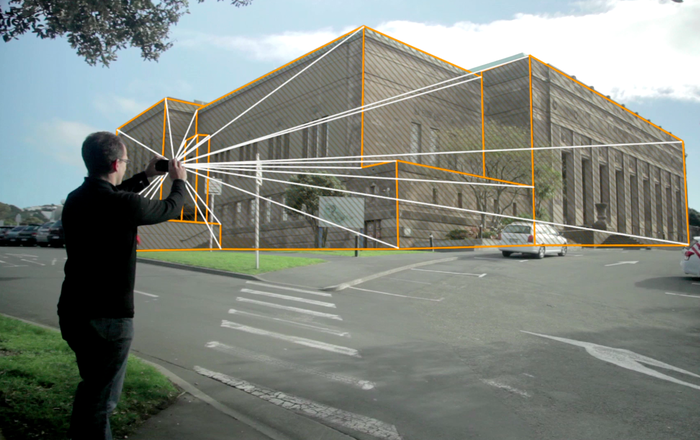
Smartphones have pretty good cameras, but nowhere near good enough to do the kind of high accuracy measurement work that’s required for engineering or remodelling projects. Enter Spike, a new smartphone attachment designed by ikeGPS, a company that specializes in building fit-for-purpose laser hardware for use in surveying and 3D modelling.

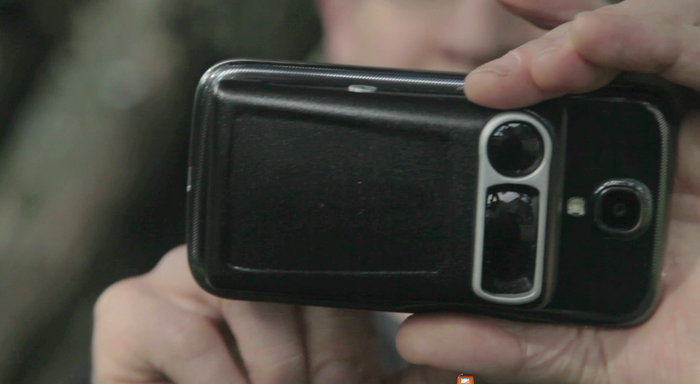
The Spike is version of their solution that attaches to the back of a smartphone and integrates directly with software on those devices to make it possible to measure objects and structures accurately from up to 600 feet away, just by taking a picture with your device. The accessory itself ads a laser range finder, advanced GPS a 3D compass and another digital camera to your smartphone’s existing capabilities, and it’s much more portable than existing solutions (pocketable, even, according to ikeGPS).

The benefits of the Spike and its powers are evident for the existing market ikeGPS already sells to; telecom and utility companies, architects, city planners, builders and more would be better served with a simple portable accessory and the phone they already have in their pocket than by specialized equipment that’s heavy, bulky, requires instruction on proper use and lacks any kind of easy instant data portability like you’ll get from a smartphone app’s “Share” functions.

But ikeGPS is after a new market segment with the Spike, too. It says the device is “built for developers & hackers,” and they suggest augmented reality as a possible consume applications, but are interesting in seeing exactly what the dev community can come up with via its full-featured API. Laser accurate measurements could indeed bring interesting features to location-based apps, though Spike is clearly more interested in letting developers more experienced with that segment of the market figure out the details.

Spike plans to eventually build a case attachment to make it compatible with any phone and case combo, though at launch it’ll be doing this via a CAD model which owners of the device can use to get mounts 3D printed themselves. It’ll work a bit like the Sony QX10 and QX100 smartphone camera lens accessories, it sounds like, and make it possible to use with any iOS or Android device.

The goal of Spike’s founding team, which includes founder and CTO Leon Toorenburg, who built ikeGPS (neé Surveylab) to fit the needs of professionals, is to make this kind of tech widely available. It’s another example of costs associated with tech decreasing quickly, and making it ultimately possible to provide something that once required a professionally trained operator and expensive, specialized hardware usable by anyone with a phone. ikeGPS techhas been used by UN and US Army engineers in disaster recover and emergency response, and now its team wants to make those same capabilities open to app developers. Others like YC company Senic are looking to accomplish similar things, but Spike’s vision is much more sweeping at launch.

The project is just over halfway to its $100,000 funding goal, and $379 scores backers a pre-order unit, which is scheduled to ship in April next year. Building a consumer device is different from building very specialized hardware on what’s likely a made-to-order basis, but at least the team has the know-how and experience to make its tech actually work.

Tuesday, October 8, 2013

GPS stuff - the essence FYI

https://www.sparkfun.com/pages/GPS_Guide

GPS Buying Guide

Above your head, right now, at an altitude of about 20,200 km there is a system of navigation satellites. There’s 35 of them, 24 active at any given time. It cost millions and millions of dollars to put those satellites in the sky and link them appropriately and you know what they’re doing?
They’re helping you find that place your friend told you about that one time.
The GPS, or Global Positioning System, is accessible from almost everywhere on Earth and provides exact coordinates of your current location so that you can figure out where you are. Combine that information with a good map and there’s nothing you can’t find. But what if you want that uncanny sense of direction in, say, your pet robot? Good news, GPS modules are small, light weight and inexpensive. They’re also pretty easy to use.
There are a ton of GPS modules on the market these days and it can be hard to figure out what you need for your project, hopefully this guide will demystify GPS a little bit and get you on the right track.
Actually, tell you what: Go read about GPS on Wikipedia, it’s a great article to get you familiar with the technology. Our job is to teach you how to use it… Now how do we actually use it? It’s gloriously simple. Every GPS module works the same: power it, and within 30 seconds to a minute, it will output a string of ASCII characters like this:
GPGGA, GPGLL, 
GPGSA, GPGSV, 
GPRMC, GPVTG