Sony A55 / A33 video recording limited by overheating sensor
By Vlad Savov  posted Sep 29th 2010 4:19AM
posted Sep 29th 2010 4:19AM
 posted Sep 29th 2010 4:19AM

Simply put, blimps are easier and quicker to build that unmanned aerial drones. This is the rationale of the Pentagon’s recent push to increase the use of what USA Today is calling ’spy balloons’ in Afghanistan to meet a growing military demand for video surveillance of insurgents. According to the Pentagon, these balloons fitted with high-powered cameras are needed because unmanned planes such as the Predator can’t be built fast enough. On top of that, the demand for video surveillance equipment from Afghan battlefield commanders has been 20 times the rate of supply. Currently there are currently 30 of these spy balloons in Afghanistan, and the goal is to have 64 of them floating thousands of feet above U.S. bases and key areas in the country. And the surveillance technology is on par with drones, and the cost is $10 million each. Definitely a viable and quick solution to meet urgent GEOINT needs. Read more here.
GISuser.com GIS and Social, Mobile Tech Images posted a photo:
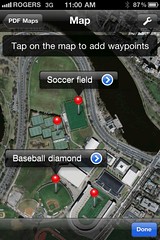
PDF Maps is the first application of its kind designed specifically for using geographically-aware PDF files on portable devices and opens the door to allowing any map to be GPS-aware. It will give users the power to interact with georeferenced PDF maps and images directly from their iOS device with viewing performance levels well above other mobile PDF viewing applications. See www.gisuser.com/content/view/21494/2/
Every time when a new device comes out, people are complaining about the battery life. It’s always the battery that gets the blame. On one side I do understand that – it is obviously quite frustrating when your battery doesn’t make it the full day – but on the other hand it isn’t something new: you will soon notice that your older Android phones won’t hold it much longer. XDA member jcsugrue calls it the “new gadget syndrome” – the battery drains so quickly because you are intensively using the phone. Everyone wants to play with his new toy, and this will drain the battery very quickly.
Yet there are some things to do about it. XDA Member shoman24v for example notices that the screen is factor number #1 when it comes to battery drain. To do something about this, it is a good idea to put the brightness of your screen down, as low as possible. Someone was able to double (!) his battery life by decreasing the screen brightness to about 10%. That’s a huge gain!
So, next time when you just bought a new device, don’t worry about the battery. Soon, it will turn out better than you thought at first, and with some small tweaks and reducing the screen brightness, you can almost be assured that you will enjoy your battery life much more!
 Battery Capacity Claims Research
 BattLineSvc V2 Battery Status Indicator
 How to Save Battery While Running Android on HD2 (Leo)
 Tweak your Droid Eris Battery with Collin_ph Battery Tweak
 tBattery Graphical Analyzer for WM
![[Mod]Battery Mod for Blue Angel (compact version)](http://www.xda-developers.com/wp-content/uploads/2010/04/vtc0150copypf6-150x150.jpg "[Mod]Battery Mod for Blue Angel (compact version)") [Mod]Battery Mod for Blue Angel (compact version)
[Mod]Battery Mod for Blue Angel (compact version) Measure and Compare Your Battery Capacity
Google’s specification for an “official” Android unit, that allow it to use Google’s logo and have access to the Android Market, includes a requirement for a built-in GPS receiver. That’s why the new line of Archos Android tablets need their own app marketplace – they don’t come with GPS receivers. So if Android phones come with GPS, why bother with an external Bluetooth GPS receiver, especially when it will cost you extra? Here are a few good reasons:
In a previous post, I looked at the battery drain from GPS, Bluetooth, WiFi, and cellular. The built-in GPS had the biggest power requirements by far; in comparison, turning Bluetooth on had virtually no effect on battery life. I just ran some additional comparison tests on battery life for the Droid X using internal GPS with Bluetooth off vs. external Bluetooth GPS. The unit was in Airplane mode in both cases, to eliminate cellular/WiFi power drain. I used the TrekBuddy map app, which lets you choose between the internal GPS and an external Bluetooth GPS as the GPS position source. Approximate battery life is given in hours, based on the time to drop from 100% battery to 60% battery. For one set of tests, the display was turned off; for the second, the display was left on continuously at 50% brightness.
| Display off | Display on (50%) | |
| Bluetooth GPS | 20.2 | 9.1 |
| Internal GPS | 11 | 5.7 |
Results are pretty dramatic – switching from the internal GPS to an external Bluetooth GPS cuts almost doubles battery life when the display is off. Even with the display on, the battery life with the external Bluetooth GPS is actually comparable to some stand-alone GPS units. For example, battery life for the Magellan Triton or deLorme PN-40 units with two AA batteries is often a bit less than 10 hours under normal use. If you remember to turn off the display when you don’t need it, you could easily get 15+ hours of continuous use by switching over to an external Bluetooth GPS.
External Bluetooth GPS units aren’t free, but they don’t have to be terribly expensive. Basic models like my Holux M-1000 (which works great with my Droid X), or the Globalsat BT-359 run less than $45, which is the cost of a standard OEM spare battery for my Droid X. My Holux will run for 16 hours on a charge, which is just about the same time you can run the Android phone before it needs recharging as well.

 posted Sep 22nd 2010 5:54AM


The big news out of Hasselblad this morning was the new entry(ish)-level H4D-31 at just under €10,000, with theCFV-50 adding yet another option in the higher-than-high-end category. But what really caught our eye was the flashy red version that popped up just as the press conference was concluding. We were told that Hasselblad had teamed with Ferrari in order to create a limited run of Ferrari-branded H4D medium format cameras, and the model on-hand had just received approval from Ferrari's paint squad yesterday. Yeah, it's like that. As for detailed specs? Fuhgetaboutit. And as for pricing? "You'll have to speak with Ferrari on that" was that line that we were fed. Only 499 of these beauties will ever be produced, and czars you never knew existed are phoning in their orders from the Seychelles right now. But hey, at least we had our camera (a lowly D3S) ready when it was unlocked from its carbon fiber box for a grand total of 30 seconds, right? Indulge yourself below -- but don't go getting too cocky, okay?

We know you're a hardy crowd and aren't impressed by mere megapixels, but how about this: the 50MP sensor inside Hasselblad's new CFV-50 digital back is physically twice as large as a full-frame imager. Yeah, now we've got your attention. Intended as the attachment that finally makes film shooters break down and go digital, the CFV-50 comes with Hasselblad's DAC lens correction features that'll hunt down and ruthlessly obliterate any distortion, vignetting, lateral chromatic aberrations, or stray feelings of buyer's remorse. Yours for only €11,990 ($15,750) plus whatever taxes your local bureaucrat elects to slap on top. Full press release and a closeup of the CFV-50 await after the break.
Update: We managed to stop by the outfit's booth here at Photokina and snag a quick hands-on. Man, does thing feel retro.
Hasselblad swept through a series of new medium format camera systems at the Photokina show along with a tease of a 200-megapixel camera next year. The H4D-31 is one of the company's cheapest ever complete cameras and shoots at 31 megapixels while still sharing all the features of the larger models, including the off-center focusing adjustment that defines the H4D line. It will cost 9,995 euros ($13,416) with either an 80mm prime lens or a CF-mount lens adapter to use existing Hasselblad optics.
Also on tap is a special Ferrari Edition of the H4D system. Hasselblad hasn't provided specifications, but it will come in a rosso fuoco color new to Ferrari itself. Much like the Ferrari Enzo, just 499 models will be made and don't have a publicly listed price.
Those using the V-system cameras can now add the CFV-50 digital back. It captures at its namesake 50 megapixelss and autocorrects for barrel distortion, chromatic aberration, vignetting and other effects that a film system wouldn't catch. It costs 11,990 euros ($16,094).
The 200-megapixel camera is actually an extension of Hasselblad's existing technology, the company said. Company product development lead Peter Stig-Nielsen explained to CNET and others at Photokina that it would be an improvement of the H4D-50 Multi Shot that moves the pixels just half a step away versus the full shifts of today but produces four times as many pixels. Moving to the higher resolution is demanding enough that Hasselblad is introducing two new lenses, a 50mm f3.5 lens (2,999 euros or $4,006) and a 120mm f4 macro (3,420 euros or $4,570), with enough optical quality to guarantee sharpness to the very edge of the lens.
Shipments of the new flagship will start in early 2011 and should see the H4D-50 Multi Shot upgradeable to the new approach.
 Camera makers must wake up to the competitive threat of mobile phones by embracing networking technology or face unpleasant consequences as photography habits shift profoundly.
That was the warning from Ed Lee, an InfoTrends analyst speaking to a photo industry audience at this week's Photokina imaging show in Cologne..
The digital camera vendors need to be much more aggressive about getting their cameras connected," Lee said. "Otherwise, I can see a world where the mobile phone will be king and the digital camera will be relegated to just taking pictures. I don't think that's a world the camera vendors want to see happen."
This months National Geographic contains, amongst a rich array of rich data graphics, an introduction to CyArk. CyArk is a project which creates archives of cultural artifacts by recording point clouds.
CyArk is a non-profit entity whose mission is to digitally preserve cultural heritage sites through collecting, archiving and providing open access to data created by laser scanning, digital modeling, and other state-of-the-art technologies.
The resulting data sets are a little like the data found in Photosynths, but the geometry is directly captured rather than infered from imagery. Below is one of their more ambitious projects: Mount Rushmore.
It works by resaving an image at a known quality, and comparing that to the original image. As a jpeg image is resaved over and over again, its image quality decreases. When we resave an image and compare it to the original, we can guess just how many times the image has been resaved. If an image has not been manipulated, all parts of the image should have been saved an equal amount of times. If parts of the image are from different source files, they may have been saved a number of different times, and thus they will stand out as a different colour in the ELA test.
It is worth noting that edges and areas red in colour are often depicted as brighter in the ELA tests. This due to the way the photos are saved by various programs. It is not proof that image was manipulated.
If you are unsure how to interpret the results, please do not claim the results of this tool as proof of anything.

 Minox, a German camera, binoculars and other optical gadgets maker said it will bring its PX3D camera to the Photokina show next week. The camera is said to be capable of capturing images in 3D that can be viewed without special glasses, though how it will accomplish this is not yet revealed. It could involve either a digital frame of some sort or lenticular prints....
 Looxcie has introduced a wearable Bluetooth camera that doubles as a headset for handsets. It comes with a free Android app that lets compatible handsets work as a viewfinder, editor and control for uploading buffered clips to Twitter, YouTube or Facebook. The camera records MPEG-4 videos at 480x320 resolution at 15FPS onto a built-in 4GB flash drive...
Thursday, September 16, 2010 12:00 PM - kimerlia
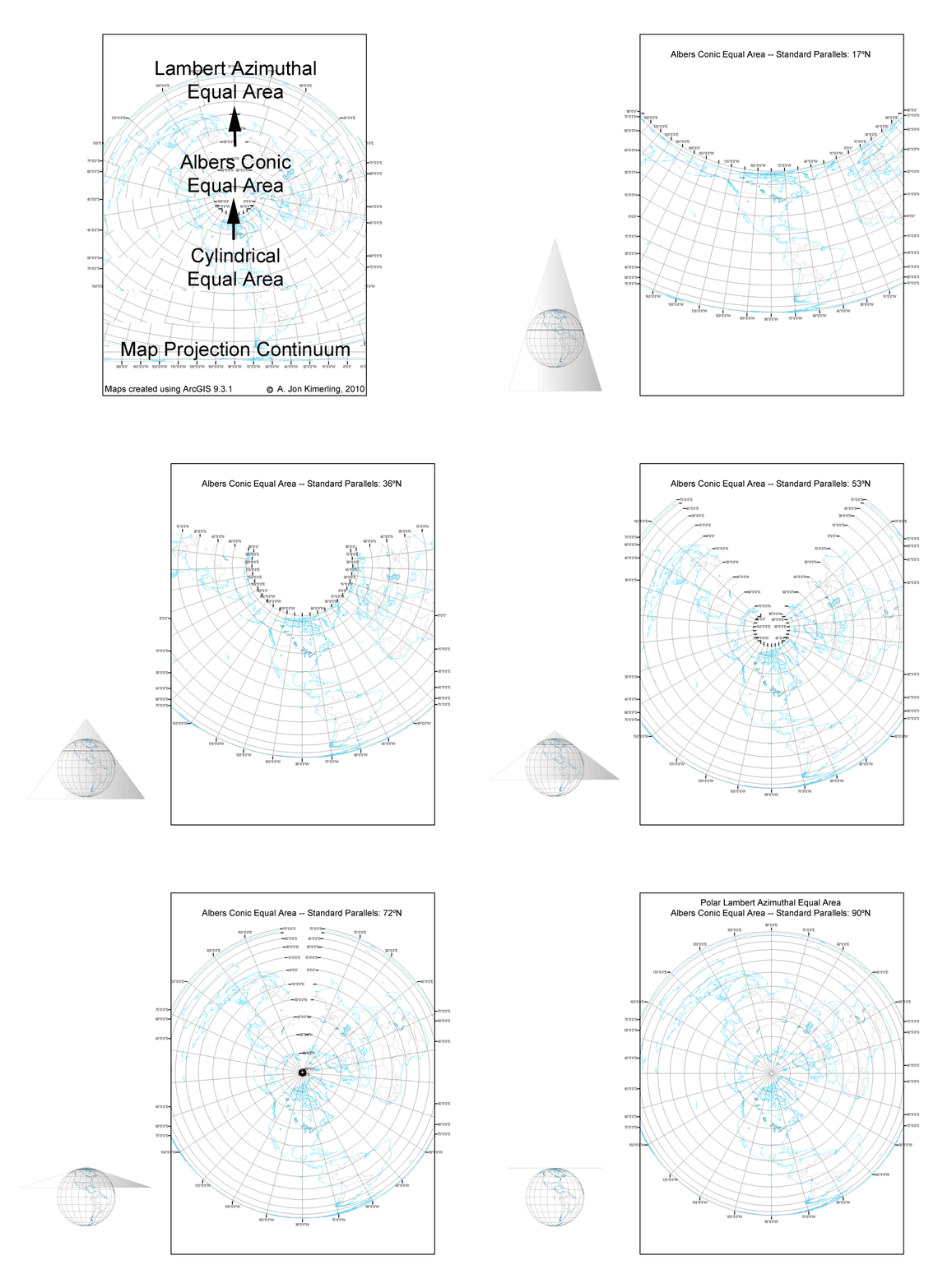
There are many ways that we can think about similarities among map projections. We can group projections as similar in map scale or as serving similar user communities. Cartographers often take a different approach and group projections by similar geometrical properties or by similar mathematics underlying their construction. Grouping projections into cylindrical, conic, and azimuthal classes is an example of grouping by similar geometrical properties, whereas categorizing projections as conformal, equal area, and equidistant is an example of grouping by similar distortion properties that are a consequence of the mathematics underlying the projections.
In this blog I would like to introduce another way of thinking about similarities among projections -- that seemingly distinct projections may actually be parts of a continuum of projections created by varying the parameters of a single pair of projection equations transforming latitude and longitude coordinates on the sphere or ellipsoid into (x,y) Cartesian coordinates on the flat projection surface. Such projection continuums are best illustrated by animations that show the changes in the graticule and coastline as a certain projection parameter is varied systematically through a large range of values. The seven map projection continuums described in the following paragraphs can be downloaded by clicking on the image to see it at full size, then right clicking and selecting "Save". I hope you will find these animations useful in your quest for further understanding the nature of map projections.
<< A really neat illustration of how the several projections warp the world for localized purpose >>
I’m sure every Blackberry owner/user has suffered at some time from an intermittent annoying buzzing on their car radio. I was reminded again last week when, with my Blackberry safely stowed in the middle front cup-holder, and its little red transmission light blinking, I got that characteristic buzz on the car radio. I know it’s a prime example of Radio Frequency Interference (RFI) — and not to adversely criticize RIM — the web insists that most cell-phones and PDAs will interact with electronics from time to time. Humidity might even affect how often or how long this could happen — really?
But seriously folks, GPS-jamming is becoming a real area of interest for some people. As the proliferation of jamming devices you can mail order from the web increases, the likelihood of someone using these electronic nightmares increases.
I remember back in the days of Microwave Landing Systems (MLS), the airline industry was questioning why the world was going to replace all the perfectly good low-frequency Instrument Landing Systems (ILS) for landing aircraft. Now, ILS has been around since WWII, and if your airline is anything like interested in keeping its schedules during winter in foggy Europe, you’ve got to have ILS to get into Heathrow or Amsterdam on certain days. But ILS and your run-of-the-mill TV transmissions can sometimes get tangled — and a "buzz" in the cockpit at the wrong moment can really mess up your day. So microwave frequency MLS came along, but took so long to implement that GPS overtook it, and now we’re all flying GPS approaches, all around the world.
All well and good until a satellite TV dish on someone’s roof creates a localized buzz in the GPS signal, or a cigarette-package-sized device completely shuts down signals inside the M-25 Motorway around London. BIG PROBLEM for Heathrow, Gatwick, or even Stansted airports — big enough to have a temporary effect on air traffic — something which short-term could, on a more limited scale, look like the recent effects of Icelandic Volcanic Ash. I say temporary and limited scale because aviation authorities can find GPS jammers pretty quickly and minimize disruptions, which have not been a major operational issue to date.
But GPS doesn’t use just a weak signal, its virtually lost in ambient electronic noise, and its real easy to jam with very low levels of jamming signal. The U.S. and other military users have known about and addressed this issue for a very long time.
If you know what direction the jammer is coming from, you could perhaps blank out that direction and prevent losing your entire navigation solution. So change your single-element omni-directional antenna into an antenna with several elements and throw a mass-of-signal processing at the incoming signals from those separate elements, and you might find one segment is being jammed. Then you can remove those distorted signals and only pass on the "clean" ones to your navigation processor. You’ll loose some satellites, of course, but you’ll see the others and you can probably compute a navigation solution.
The trick is in the signal processing you throw at this problem, and it's taken some very clever engineering to solve that problem, then be able to package it in something smaller than a Cray supercomputer to make it mobile. I would anticipate that most "high-value assets" in today’s conflict zones carry some form of anti-jam protection based on the use of phased array antennas. As for the lower value assets — like your average Humvee — its hard to stick electronics on it with a price tag higher than the cost of an entire fleet of vehicles, so work is underway to get the price of protection down so most everything can be protected.
So what do the rest of us do (who don’t fly an F-18 or a Blackhawk) and who need our Garmin or TomTom to show us how to get to the Mall of America when visiting Minneapolis? Well, its not really a problem yet, folks, and we don’t need to rush to the military surplus store just yet. Emission and susceptibility standards were created to protect the consumer, and we pretty quickly find those "buzzing" TV dish antennas that are having a bad day. But the GPS infrastructure on the ground — that which helps with integrity and improved accuracy for aircraft, and civil aircraft themselves — this is where you would expect some of that reduced cost protection from the military to eventually end up.
It will be interesting to see at this year’s Institute of Navigation (ION) convention in Portland if there will be suppliers perhaps showing the promise of military/commercial reduced size and cost anti-jam systems.
Tony Murfin
GNSS Aerospace LLC

Apple needs a Verizon iPhone as badly as Verizon subscribers (and their frustrated AT&T counterparts) want one. And if it doesn’t bring one to market soon, it risks being overrun by Google’s massing Android army. That’s the theory put forth by Bernstein Research analysts Toni Sacconaghi and Pierre Ferragu, who predict that Android’s installed base could exceed that of the iPhone in just five quarters–unless Apple ends exclusivity on the device in the United States and abroad.
And they’ve got the numbers to back it up. According to the two analysts, Android’s device shipment run rate has more than tripled in the past seven months, from 60,000 to 200,000 per day. That means there will be some 53 million Android devices shipped this year. “Even under the conservative assumption that Android’s run rate remains constant for the rest of the year, Android alone will contribute 25 percent points of y/y growth to the entire smartphone market,” Sacconaghi and Ferragu contend (click image to enlarge).

Meanwhile, Apple (AAPL) is shipping “iOS devices” (a grouping that includes the iPhone, iPod touch and iPad) at a run rate of 230,000.
That means the smartphone market is going to see a head-to-head battle for market share between Apple and Google (GOOG) sooner rather than later. Sacconaghi and Ferragu’s advice to Apple if it wants to win that battle: End carrier exclusivity in Germany and the U.S. and add new iPhone carriers in countries that currently have just one, like Japan and South Korea.
“[The iPhone’s] distribution vacuum, coupled with weak competitive offerings from other smartphone manufacturers, has made Android a strong alternative platform,” the analysts argue. “The key to arresting Android’s momentum then will be for Apple to broaden distribution. We believe that a CDMA iPhone is being developed by Apple and are modeling it to be distributed at Verizon (VZ) in mid 2011–various data points suggest it could actually be sooner, likely in early 2011. We believe Apple needs to strike distribution deals with these carriers, even if it has to sacrifice some pricing power since doing so would (1) still be accretive to company gross margins; and (2) take away the strong foothold it currently provides to a potentially formidable competitor.”
Assuming Apple does that and this all plays out as Sacconaghi and Ferragu foresee, what’s going to happen to RIM (RIMM) and Nokia (NOK)? Nothing good. “While Android and Apple are growing above market rates, other platforms are languishing in terms of developer support, and our recent proprietary research points to limited excitement among consumers,” the two write. “Given the continued momentum for Android and Apple, a scenario in which Nokia’s and RIM’s platforms get increasingly marginalized becomes a possibility.”
[Image credit: Droids and Bernstein Research]
My Tracks
from geo2web.com  My Tracks allows you to record GPS tracks and view live statistics,such as time, speed, distance, and elevation, whilst hiking, biking or running. The application includes the option to export your tracks to Google Spreadsheets and visualise them on Google My Maps.
My Tracks also allows you to view the elevation profile of a track by time or distance, create waypoints on your track and spilt tracks into subtracks.
http://market.android.com/search?q=com.google.android.maps.mytracks
(use your Android phone to open these links – the links won’t work from a desktop)
To further simplify movie shooting, Live View is activated by a single dedicated switch, and HD video recording is achieved by pressing a single button. The D7000 D‐SLR also incorporates a built‐in HDMI output CEC compliant (Consumer Electronic Control) that allows users to connect it to a HDTV and playback with most HDTV remote controls.

We are excited to announce that the first episode of the Geospatial Revolution Project is now available. And, all we can say is that it is absolutely awesome. Geospatial technologies are truly revolutionary, and this episode reminds us that what we do as GIS/GEOINT professionals has (and will continue to) changed the world. In case you are not familiar with the Geospatial Revolution Project it is an integrated public media and outreach initiative about the world of digital mapping and how it is changing the way we think, behave, and interact created by Penn State Public Broadcasting. Check out our exclusive podcast with Stephanie Ayanian, senior producer, who shares her insights about this special project. And, of course, we are featuring Episode 1 in this post. Be sure to check it out!
Red Hen Blue2CAN for Nikon D3 and D300 GPS cameras review
Pocket GPS World Article by Mike Barrett
Last year Nikon announced the latest in their range of Digital SLR cameras, the D3 and D300. These are targeted at the top of the range with a price tag of £3400 for the D3 (yes that is three thousand) and a slightly more affordable £1300 for the D300.
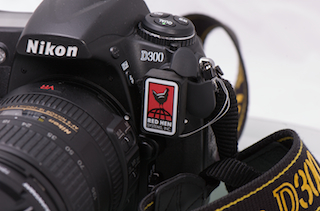
Red Hen Systems have produced a tiny Bluetooth adapter that connects to a bluetooth GPS and transmits the GPS data to the camera: the Blue2CAN. The Blue2CAN retails at $279 USD.
Both new Nikon cameras have a special 10 pin connector which amongst other functions allows you to connect a GPS to the camera. This then provides a NMEA datastream from which the camera can extract the positional information and stamp the image meta data with the location that the picture was taken.

![Full size [1Mb] US Soils Taxonomic Order Map](http://blogs.esri.com/Support/photos/mapping_center_may_2008/images/632/secondarythumb.aspx "Full size [1Mb] US Soils Taxonomic Order Map")